
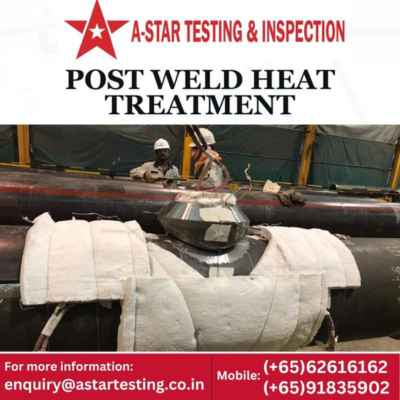
Welding is among the most important fabrication processes that are applied in various industries, including oil and gas, petrochemicals, power generation, marine engineering, construction and manufacturing. Although welding produces strong and durable joints, it also brings about residual stress and metallurgical alteration, which can influence the long life of welded constituents.
To overcome these issues, industries use Post Weld Heat Treatment in Singapore as an effective way through which they can enhance the quality of welds, reduce stress concentration, and improve structural reliability. Through proper management of the heating and cooling process post-welding, organisations are able to enhance the performance of the components, increase service life and meet industry requirements.
This guide has clarified the essence of post-weld heat treatment, its advantages, uses, and why it is an essential element of the current fabrication and maintenance procedures.
What Is Post-Weld Heat Treatment?
Post Weld Heat Treatment (PWHT) is a controlled heating process that is implemented to the welded parts once the welding has taken place. The aim is to minimize residual stresses, enhance the material characteristics and minimise any risk of cracking or premature failure.
The process involves:
- Heating of the welded part.
- Keeping the material at a given temperature.
- Slow cooling in controlled conditions.
Precise temperature and time are dependent on the type of material, thickness, and industry standards that can be used.
PWHT is normally applied to carbon steel, alloy steel, pressure retaining components and critical welded structures.
Why Residual Stress Is a Concern
The uneven expansion and contraction of a material during welding are due to localised heating and cooling. The resultant stresses are residual stress being trapped within the weld and heat-affected zone.
High levels of residual stress may lead to:
- Stress corrosion cracking
- Distortion and deformation
- Reduced fatigue resistance
- Premature equipment failure
- Lower structural reliability
That is why Weld Stress Relief Treatment is commonly indicated to be used in the critical industrial applications.
Key Benefits of Post-Weld Heat Treatment
PWHT has a number of significant benefits to welded structures and equipment.
Improved Structural Reliability
The minimisation of residual stress enhances the components’ withstanding operational loads and environment.
Enhanced Weld Integrity
Weld Integrity Improvement is one of the main objectives of PWHT. Heat treatment is important in maximising the metallurgical properties and minimising the risk of failures associated with welding.
Increased Fatigue Resistance
Stress-relief treatment of components subjected to cyclic loading results in better fatigue performance.
Reduced Risk of Cracking
PWHT is used to reduce stress-related cracking and hydrogen-based cracking of the vulnerable material.
Longer Equipment Service Life
Having enhanced the structural stability and material performance, heat treatment helps in increasing the lifecycle of assets.
Industries That Rely on PWHT
Post-weld heat treatment is necessary in many industries to guarantee safety, reliability and compliance.
Oil and Gas Industry
Heat treatment is commonly given to pressure piping systems, process equipment and critical welds prior to commissioning.
Power Generation
PWHT is used in boilers, turbines and high temperature piping systems to ensure long-term reliability.
Petrochemical Facilities
Heat treatment of welded pressure equipment is done in refineries and chemical plants to enhance the performance of the equipment.
Offshore and Marine Operations.
Marine structures and offshore equipment work in severe conditions where stress relief and weld integrity is needed.
Manufacturing and Heavy Engineering
Industrial facilities employ fabricated parts that, in most cases, need to be subjected to thermal treatment as part of quality requirements.
Pressure Vessel Heat Treatment and Safety
The pressure vessels work under the pressure and temperature conditions. Any form of weakness on the welded joints may be a great threat to operations and safety.
Why Pressure Vessel Heat Treatment Matters
Pressure Vessel Heat Treatment helps:
- Reduce residual stress
- Improve weld durability
- Enhance structural stability
- Meet code requirements
- Extend equipment lifespan
Most pressure vessel standards demand heat treatment in order to offer a safe operation during the lifecycle of the asset.
How the PWHT Process Works
Despite the difference in procedures based on the specifications of the materials, the overall process has a few major steps.
Controlled Heating
The part is then heated to a pre-stated temperature at a very slow rate to prevent a thermal shock.
Soaking Period
The material is kept at the necessary temperature during a certain time, which allows redistributing stress and stabilizing metallurgically.
Controlled Cooling
Slow cooling inhibits the formation of new stresses and maintains wanted material properties.
The providers of Professional Heat Treatment Service in Singapore have specialized equipment and monitoring systems to control the temperature during the process.
Importance of Heat Treatment Services in Modern Industry
With the continued development of the fabrication standards, heat treatment is now an important quality assurance factor.
Reliable Heat Treatment Services Singapore helps organisations by:
- Improving product quality
- Enhancing equipment reliability
- Supporting regulatory compliance
- Reducing maintenance costs
- Minimizing operational risks
It is especially useful in critical infrastructure in which failure cannot occur.
PWHT and Asset Reliability
Preventive maintenance and lifecycle management approaches are becoming more popular in modern industries.
Well-known Industrial Heat Treatment Solutions aid reliability programs by aiding organisations to:
- Reduce repair frequency
- Improve operational performance
- Strengthen safety systems
- Lower lifecycle costs
- Increase asset availability
The use of heat treatment is commonly part of larger asset integrity and quality management programmes.
Emerging Trends in Heat Treatment Technology
The development of thermal processing keeps enhancing efficiency and quality.
Industry Trends
Automated Temperature Monitoring
Digital systems have real-time temperature control and recording.
Mobile Heat Treatment Units
Large structures and piping systems can be treated on-site by portable equipment.
Data-Driven Quality Control
Complex reporting enhances traceability and compliance reporting.
Energy-Efficient Heating Systems
The reduced use of energy with the use of modern technologies does not impact the accuracy of processes.
Such innovations assist industries in having a better performance and enhance operational efficiency.
Frequently Asked Questions (FAQs)
Q1. Why do we need to do post-weld heat treatment?
Ans: PWHT minimises stress remaining after welding, enhances the material properties and increases the long-term reliability of welded elements.
Q2. What are the typical industries that use PWHT?
Ans: Oil and gas, power generation, petrochemical, marine, offshore, and manufacturing industries frequently use post-weld heat treatment.
Q3. Is all the welded material to be heat treated?
Ans: No. The need varies based on the nature of the material, thickness and service conditions, as well as industry standards.
Q4. What is the benefit of using PWHT to enhance the performance of welds?
Ans: It lowers stress levels, increases toughness and fatigue resistance, and reduces the risk of cracking.
Q5. Why is pressure vessel heat treatment important?
Ans: The heat treatment of pressure vessels enhances structural integrity and aids in the safe operation under pressure and temperature loads.
Conclusion
With industries steadily focusing on safety, reliability, and the long-term performance of assets, thermal treatment processes still play a pivotal role in fabrication and maintenance strategies. Effective stress relief will not just improve the quality of the weld but also minimize the possibility of failures that can affect operations and safety.
Through the investment of professional Post Weld Heat Treatment in Singapore, organisations can realise improved Weld Integrity Improvement, enhanced equipment reliability, and improved life cycle of key assets. Together with complex inspection and quality assurance methods, PWHT is a necessary measure to provide safe and efficient industrial operations.