
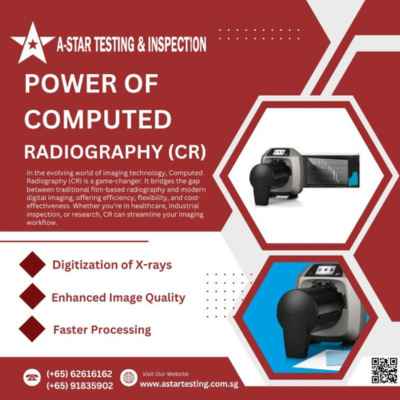
Inspection of industries has developed considerably throughout the years, and imaging technology has been one of the largest contributors to the same. Currently, industrial businesses require inspection solutions that provide precise results in minimal time with minimal downtime and enhanced security. Computed Radiography is now a solution of choice due to its ability to provide the dependability of conventional radiographic testing and the efficiency of digital image processing.
In almost all cases, whether the inspections are on pipelines or pressure vessels, structural welds, or important manufacturing parts, this technology allows an inspector to identify internal defects without breaking the material. We will discuss in this guide how the technology functions, its applications, and why it is an important part of the contemporary Non-Destructive Testing (NDT).
What Is Computed Radiography?
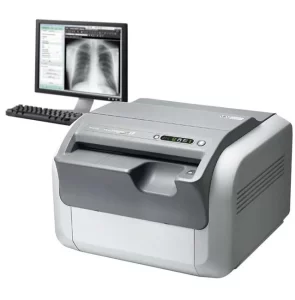
Computed Radiography is a type of digital radiographic examination that uses reusable imaging plates instead of the traditional X-ray film. Once the imaging plate has been exposed to X-rays or gamma rays, it is scanned with a special reader, which transforms the stored image into a high-quality digital image.
In contrast to the classical film processing, there is no chemical development to do; inspection is quicker, cleaner, and greener. The digital images can be improved, stored, shared, and reviewed in real time, and assist the inspectors in making faster and better decisions.
How the Computed Radiography Process Works
Knowing the Computed Radiography Process can aid in understanding why it has become a reliable inspection technique in all industries.
The steps involved in the process usually include:
- The plate used in imaging is placed behind the test item.
- The element is subjected to X-rays or gamma rays.
- The radiation pattern is captured in the imaging plate.
- CR is scanned on the plate.
- A special program transforms the data into a digital image.
- The inspectors examine the image of cracks and porosity, corrosion, absence of fusion, and other internal defects.
- The imaging plate is wiped off and reused in subsequent inspections.
The workflow will greatly save time on inspections and produce high-quality images.
Benefits of Computed Radiography
There are several Benefits of Computed Radiography that make it an attractive choice for industrial inspection.
Faster Inspection Results
Digital image processing helps to eliminate the lengthy film development process and enables almost immediate review of images by the inspectors.
Improved Image Quality
Software applications permit zooming, contrast, image enhancement, and analysis in detail without having to check the image again.
Reusable Imaging Plates
Through imaging plates, unlike traditional film, it is possible to use the plates on several occasions, which lowers the operating costs in the long run.
Environmentally Friendly
Waste disposal is a lot easier and more environmentally friendly because chemical processing is eliminated.
Easy Digital Storage
Reporting of inspection and images may be stored electronically, which makes traceability, audits, and subsequent comparisons easier.
Better Collaboration
The digital files may be accessed safely and transferred to engineers, project managers, clients, and regulatory authorities regardless of the location.
Applications of Computed Radiography
The Applications of Computed Radiography are ever-increasing in industries that need precise internal inspection.
Common applications include:
- Weld quality inspection
- Pipeline integrity assessment
- Pressure vessel examination
- Storage tank inspections
- Structural steel evaluation
- Aerospace component inspection
- Testing of power generation equipment.
- Oil and gas plantations.
- Marine and offshore infrastructure.
- Manufacturing quality control
It is particularly useful in any case where quality Industrial X-ray Inspection is needed without causing disruption to the operations or destruction of valuable assets.
Computed Radiography vs Digital Radiography
Computed Radiography vs Digital Radiography is a subject of comparison by many professionals when choosing an inspection method.
|
Feature |
Computed Radiography |
Digital Radiography |
|
Image Capture |
Reusable imaging plates |
Flat panel digital detector |
|
Equipment Cost |
Less initial investment |
More initial investment |
|
Workflow |
Plate scanning was needed |
Instant image capture |
|
Portability |
Very portable |
Depends on type of detector |
|
Existing Equipment Compatibility |
Easily integrates with many existing X-ray systems |
Often requires dedicated digital equipment |
To organizations that are moving out of traditional film radiography, computed radiography offers a cost-effective way of going digital with their radiography systems without necessarily changing the whole system.
Why It Matters in Modern Industrial NDT
The contemporary industries require quicker inspections, better documentation, as well as continuous quality assurance. Both the cost of projects and the possibilities of equipment failures or accidents caused by missed defects may raise the cost of the project inspection.
Digital radiographic techniques aid in predictive maintenance, regulatory compliance, and enhanced working efficiency. They also simplify the inspection records that can be inspected later on to conduct quality audits.
With industries ever-going digital, the advanced radiographic inspection has now become a significant component of asset integrity management and preventive maintenance programs.
Best Practices for Reliable Inspection Results
In order to attain uniform inspection quality, organizations ought to:
- Operate precision imaging equipment.
- Adhere to accepted inspection practices.
- Observe good radiation safety measures.
- Make sure that inspections are done by qualified and certified NDT personnel.
- Periodically check and repair scanning systems and imaging plates.
- Keep digital inspection records safely to be referred to.
Adhering to these practices assists in enhancing the reliability of inspection, as well as complying with industry standards and customer expectations.
Frequently Asked Questions
Q1. What is the use of Computed Radiography?
Ans: It is mainly employed to examine welds, pipelines, pressure vessels, castings, structural elements, and industrial equipment to detect hidden defects devoid of destruction.
Q2. Is Computed Radiography better than traditional film radiography?
Ans: It is faster in image processing, has reusable imaging plate, digital storage, is superior in image analysis, and does not require development of chemical film, hence is more effective in most industrial purposes.
Q3. What is the difference between Computed Radiography and Digital Radiography?
Ans: No. They both generate digital images, but computed radiography involves reusable plates of imaging, which must be scanned, whereas in digital radiography, the plates are a flat-panel detector that captures images immediately.
Q4. What industries are the most helpful in this method of inspection?
Ans: It is widely used in oil and gas, petrochemical, marine, offshore, manufacturing, aerospace, power generation, and construction industries to assure quality and to conduct inspections on asset integrity.
Q5. Are the digital inspection images stored to be reused by future audit?
Ans: Yes. It is easy to store, retrieve, share, and compare digital files with past records of inspection and documentation, which is so much easier than when there is film.
Conclusion
Digital inspection technologies are further transforming the way industries ensure quality assurance is made, and Computed Radiography is one of the most viable methods of making accurate, efficient, and cost effective radiographic inspections by organizations. It has high-quality imaging, reusable plates, simplified workflows, and easy record management, all of which are significant benefits compared to the traditional film-based techniques. With the process of industrial resources becoming more complicated and the necessity to meet compliance requirements constantly growing, the introduction of modern radiographic inspection methods can contribute to the enhancement of safety, downtime reduction, and the overall stability of the operation over time.